
Medline Warehouse Fire Attorneys
Medline Warehouse Fire Attorneys Warn Tracy Residents About Smoke Exposure and Property Damage
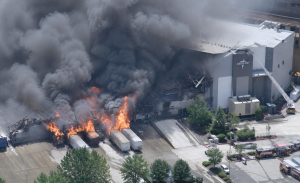 A massive fire at the Medline Industries distribution facility in Tracy sent a towering column of black smoke over San Joaquin County on Thursday, drawing a major emergency response and forcing evacuations around one of the region’s large warehouse and logistics corridors.
The fire broke out Thursday afternoon at Medline’s Tracy distribution facility near the 5700 block of Promontory Parkway, in the Prologis International Park of Commerce. Local officials said firefighters responded to a large commercial structure fire, while Tracy fire attorneys and police closed Promontory Parkway and urged the public to avoid the area as crews worked to contain the blaze, assist with evacuations and direct traffic.
Medline Fire Cause: The cause of the fire remains under investigation. Investigators reported that the blaze appears to have originated within the building and spread from an area near the roofline. Upon arrival, emergency crews discovered that the facility’s automatic sprinkler system had not engaged. Firefighters also encountered inoperable hydrants located on the property, forcing them to secure a water supply from a city hydrant situated outside the facility grounds.
Until investigators complete their work, the public should avoid speculation. But affected workers, residents and businesses do not need to wait to protect their own records. Documentation gathered in the first hours and days after a fire often becomes critical later.
Medline, one of the nation’s largest medical-surgical supply companies, confirmed that the fire occurred at its Tracy distribution facility and said all Medline employees and on-site personnel were accounted for. FedEx, which operates a neighboring Tracy hub, also reported that its employees were safely evacuated and accounted for after the fire threatened or spread toward nearby properties.
Medline Distribution Center is a Total Loss
By Thursday evening, San Joaquin County fire officials described the Medline distribution center as a total loss. News helicopters showed a sprawling warehouse heavily damaged by flames, with black smoke visible from miles away. Officials also reported that nearby trailers and wooden pallets burned as strong winds pushed flames and embers through the industrial area.
Although no injuries were immediately reported, the fire created major public-safety concerns for workers, nearby businesses and residents. Police advised people affected by smoke to close windows and shelter in place. Several nearby warehouses evacuated. Workers from Medline, FedEx and other businesses reportedly gathered at nearby restaurants and gas stations after evacuating the industrial park.
One of the most significant early details came from Tracy Fire Chief Randall Bradley, who said during a Thursday evening press conference that the warehouse sprinkler system was not operating when firefighters entered the building. He also said fire hydrants were not providing strong pressure, which hindered the initial firefighting attack.
Those details do not, by themselves, prove negligence or legal responsibility. Fire investigations take time, and early reports can change as officials inspect the scene, review maintenance records, interview witnesses and analyze surveillance footage. But a non-operating sprinkler system and poor hydrant pressure raise obvious questions that investigators, insurers, property owners and affected businesses will likely examine closely.
Modern warehouses depend on layered fire protection. Sprinklers, alarms, fire walls, hydrant access, emergency planning and safe storage practices all play a role. When a facility stores medical supplies, packaging, pallets, plastics, paper products or other combustible materials, fire protection becomes even more important. A small ignition source can become a catastrophic structure fire if suppression systems fail, water supply proves inadequate or combustible inventory allows flames to spread quickly.
For nearby property owners and businesses, the damage may extend beyond the destroyed warehouse. Large commercial fires can produce smoke, soot, ash, debris, water runoff and business interruption losses. Smoke can infiltrate HVAC systems, contaminate inventory, damage vehicles, affect electronics and create lingering odors inside buildings. Even when flames do not reach a property, soot and particulate matter can create expensive cleanup needs.
Residents should also take smoke exposure seriously. Warehouse smoke can contain a complex mixture of burned building materials, packaging, plastics, chemicals and other products. Anyone who smelled smoke, saw ash on their property, experienced breathing symptoms or noticed residue on outdoor surfaces should document what happened. People with asthma, heart conditions, respiratory illnesses, young children and older adults face heightened concerns during heavy smoke events.
Anyone affected by the Tracy Medline fire should take practical steps now. Photograph smoke, ash, debris and property damage before cleanup. Save receipts for hotel stays, air purifiers, filters, cleaning supplies, lost inventory, towing, repairs or replacement items. Keep a written timeline of what you saw, smelled and heard, including evacuation notices, road closures, shelter-in-place instructions and business interruptions. Do not throw away damaged property until you have photographed it and checked whether an insurer, investigator or attorney needs to inspect it.
Businesses in the area should preserve records showing lost work time, interrupted operations, canceled deliveries, damaged goods and cleanup expenses. They should also inspect HVAC systems, warehouse inventory, loading docks, vehicles and outdoor equipment for smoke or soot contamination. Commercial property policies may cover some losses, but insurers often dispute the scope of smoke damage, cleaning costs and business interruption claims.
The Medline fire also fits a larger pattern of high-risk warehouse fires in California. Large logistics centers often operate near highways, residential growth areas and other businesses. When a fire erupts in one of these facilities, the impact can move quickly beyond the property line. Strong winds, dense smoke, limited access routes and nearby combustible materials can turn a warehouse fire into a regional emergency.
That makes accountability important. Investigators will likely review whether the building’s fire-protection systems complied with code, whether inspections and maintenance occurred as required, whether stored materials created unusual hazards, whether pallets or trailers helped spread the fire, whether emergency access remained clear, and whether public agencies had adequate water supply and response plans for a facility of this size.
The Tracy Medline warehouse fire destroyed a major distribution facility, disrupted nearby businesses and sent smoke across a wide area. The full impact may take weeks or months to understand. For now, the key questions remain: What started the fire? Why did it spread so rapidly? Did the sprinkler system and water supply perform as required? And who, if anyone, bears responsibility for the losses suffered by surrounding businesses, workers and residents?
As the investigation continues, affected community members should monitor official updates, document their losses and seek guidance before accepting any quick insurance determination or cleanup assessment. Large fires often create damage that is not immediately visible, and the true cost of smoke, soot, evacuation and business interruption can emerge long after the flames go out.
If you’ve been injured in Tracy, CA in the Medline Fire, contact a warehouse fire attorney today.
Photo credit: Photo created with ChatGPT
Our Articles
© Copyright 2026 Fire Litigation. | All Rights Reserved.