
The Orleans Complex Wildfire: A Devastating Blaze in Siskiyou County
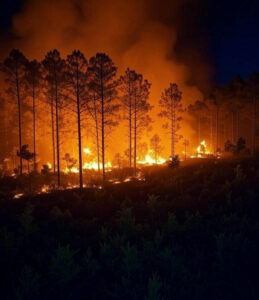 Early in July 2025, the Orleans Complex wildfire broke out in the isolated and untamed areas of Siskiyou County, California, endangering local infrastructure, wildlife, and communities. This complicated fire, which was mostly made up of the Red Fire and the Butler Fire, turned into one of the most important wildfires in Northern California this year. As smoke filled the skies and flames spread across steep and inaccessible terrain, residents and emergency personnel were immediately placed on high alert.
On July 3, 2025, lightning struck during a series of summer thunderstorms, starting the Butler Fire, the complex’s larger fire. Situated close to Butler Mountain, approximately ten miles east of Orleans, the fire quickly expanded through regions that had previously been impacted by previous wildfires, such as the 2013 Butler Fire, the 2020 Salmon Fire, and the 2024 Boise Fire. Due to the abundance of fuel provided by weakened soil and dry vegetation, these previous burn scars aided in the fire’s aggressive growth. Despite being smaller, the Red Fire near Blue Creek, about 1.5 miles north of Nickowitz Peak, was nevertheless a serious threat because of its dense vegetation and challenging access.
Red and Butler Fires Force Evacuations in Mountain Communities
The Red Fire burned 116 acres before it was contained, while the Butler Fire spread to over 20,000 acres in the first few days. Communities like Butler Flat, Lewis Creek, and Forks of Salmon were ordered to evacuate immediately due to the fires’ explosive growth. Authorities advised people to evacuate immediately due to the fire’s rapid advance, displacing hundreds of residents. Highway closures hampered the delivery of emergency supplies and made evacuation difficult for locals, especially in isolated mountain corridors.
Homes, ranches, and vital infrastructure were seriously threatened by the fires, which also destroyed or damaged a number of outbuildings. The risk to communication networks and power lines further complicated emergency response and firefighting efforts. The quick spread of the fire had a significant impact on wildlife habitats, and local farmers and livestock owners faced the possibility of losing pastureland and animals.
Steep terrain, restricted access, and fluctuating winds presented major challenges for firefighters. A variety of ground-based containment techniques were used by the crews, such as building fire lines, removing vegetation, and managing backburns. To get to spot fires in a number of locations, firefighters had to walk across rivers and far-off ridges. Air support was essential; “super scooper” planes refilled from neighboring rivers to support ongoing operations, while helicopters and fixed-wing aircraft dropped water and retardant to slow the flames.
Working under Red Flag Warnings, which indicate extreme fire danger due to hot, dry conditions and gusty winds, more than 600 personnel were involved in suppression efforts during the height of the fire. After a few days of intense firefighting, the Red Fire was completely contained, while the Butler Fire had reached 94% containment by late July. In order to achieve final containment, fire managers stressed the importance of closely monitoring hotspots and post-fire hazards like falling trees, weakened soil, and residual smoke plumes.
The wildfire was continuously covered by local and regional media outlets. By providing information on fire line progress, evacuation orders, and fire growth, news stations assisted locals in making well-informed decisions to safeguard their property and themselves. In addition to covering air quality problems and road closures that impacted larger areas of Northern California, the media focused on the difficulties faced by firefighters and the dangers to rural communities.
Although there was little residential damage from the fires, the loss of ranch infrastructure, property damage, and resident displacement made recovery extremely difficult. For those impacted by the Orleans Complex wildfire, a Siskiyou County fire lawyer can offer crucial support. In order to help people put the pieces back together after a disaster, legal professionals can help residents and businesses with insurance claims, coverage clarification, navigating relief programs, and pursuing compensation where appropriate.
Our Articles
© Copyright 2026 Fire Litigation. | All Rights Reserved.